
Straight Talk From a Contractor
EVERYTHING YOU NEED
TO KNOW ABOUT
EPOXY FLOORS
No marketing fluff. Straight answers about how epoxy floor coatings actually work, what makes them last on a Minnesota slab, why so many of them fail, and what to look for before you hand anyone a deposit. Written by Benjamin Buckner and Mitchel Lovett, co-owners of Polar Epoxy.
WHAT IS EPOXY
FLOOR COATING?
Epoxy is a two-part resin that cures into a hard film bonded to concrete. Straight epoxy isn't UV-stable, so real garage stacks add a polyaspartic topcoat for sun, chemicals, and hot-tire pickup.
When people say “epoxy garage floor,” they usually mean a ground slab, epoxy base with full flake broadcast, then polyaspartic—that combination is what holds up in daily use.
Mechanical prep and joint work decide whether you get a durable floor or peeling in a season. The product on the can rarely fails first; the slab underneath does.
Types of Coatings We Install
Diamond-ground base, full flake, UV-stable polyaspartic top—the workhorse for residential garages.
Decorative flowing finish for show garages and entries where the floor is part of the design.
High-build industrial systems for warehouses, bays, and retail—abrasion resistance and striping available.
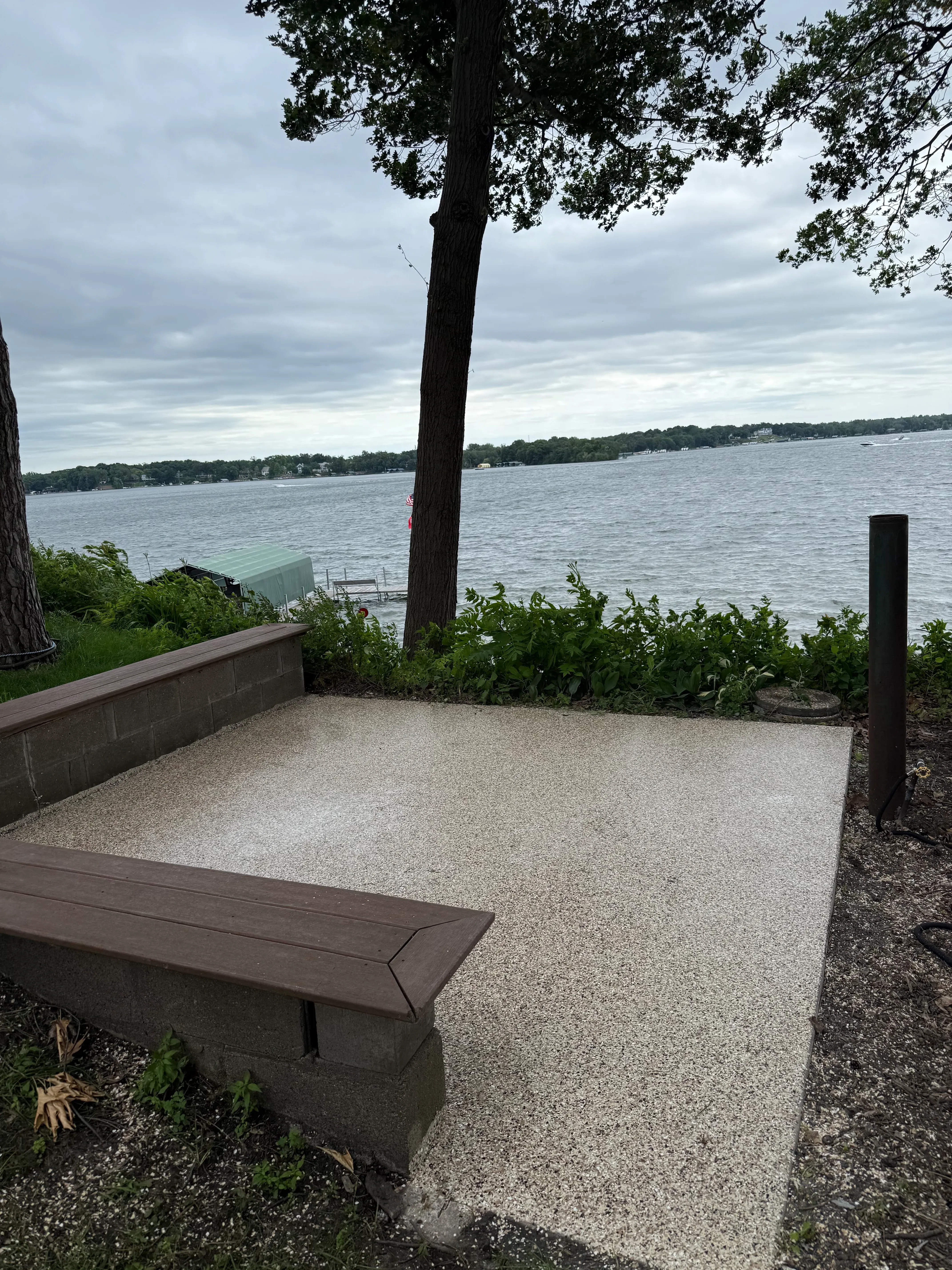
Fast-cure, UV-stable outdoor slabs—patios and walks you can put back in service the same day.
The Most Important Step
WHY SURFACE PREP
IS EVERYTHING
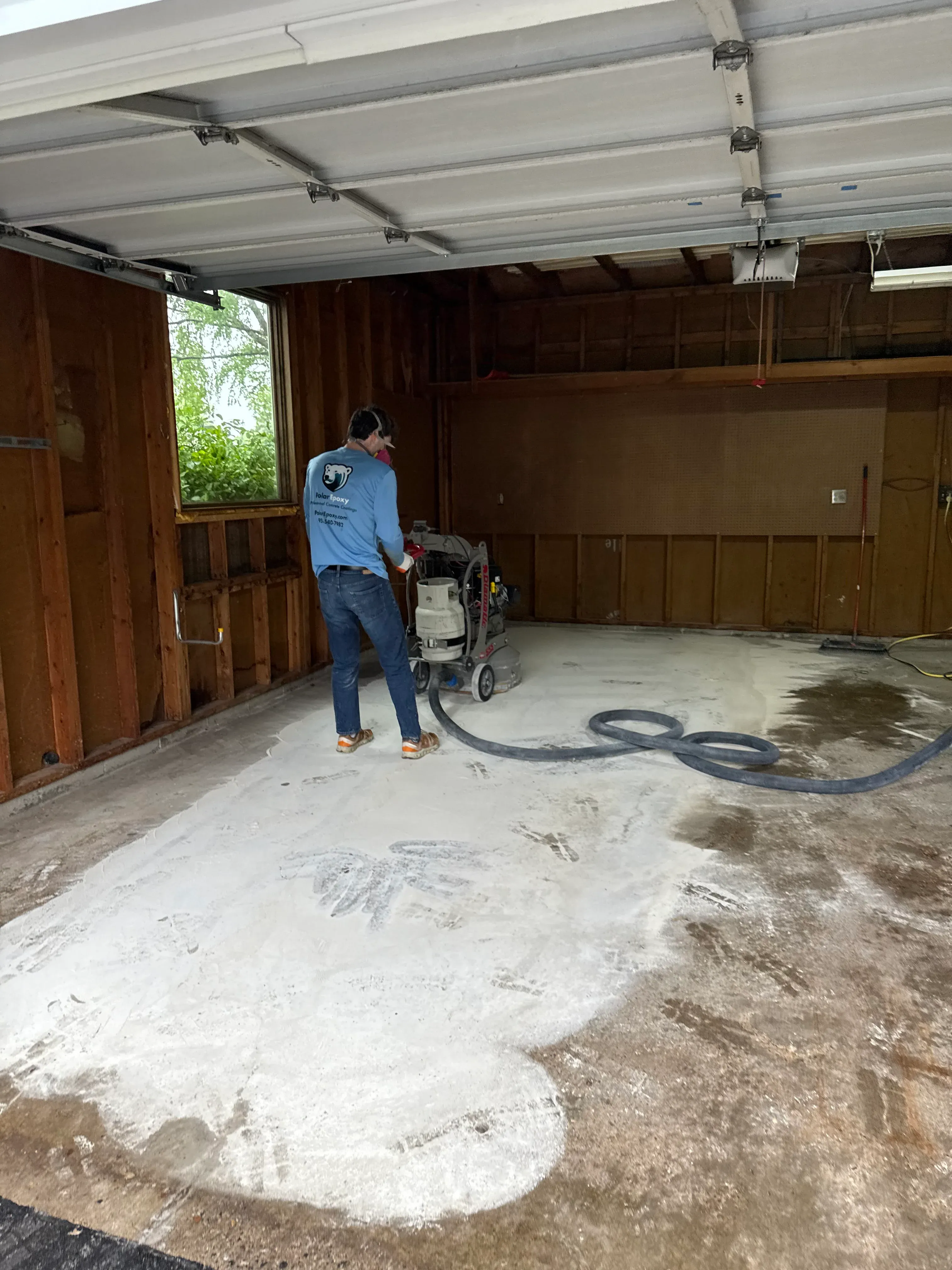
Most failures we see—peel, bubble, lift—start with a slab that was never diamond-ground before coating. Chemistry is rarely the villain; skipped prep is.
Grinding cuts weak paste away and opens a profile coatings can bite into—something acid wash cannot match. We fix what the grinder reveals, then we coat.
- Diamond grind every slab—no acid-wash shortcut
- Joints, saw cuts, and shrinkage cracks addressed before coating
- Moisture testing when the slab is at risk
- Edge grind to the wall for full coverage
Minnesota-Specific Advice
WHAT MINNESOTA
WINTERS DO TO
EPOXY FLOORS
Minnesota slabs see road salt, ice melt, and wide temperature swings—chloride sits on the concrete all winter, and older garages scale at the overhead-door drip line.
Bare epoxy can amber and stiffen under UV and cold. We run a UV-stable polyaspartic topcoat on every job so the finish stays flexible and chemical-resistant through real winter use.
Common Questions
FREQUENTLY ASKED
QUESTIONS
Before You Hire Anyone
WHAT TO ASK AN
EPOXY CONTRACTOR
Do you diamond-grind every slab?
No grind (or acid wash instead) is a walk-away. Mechanical profiling is what actually locks the system to the slab.
How do you handle control joints and cracks?
Look for V-cut, clean, and flexible polyurea fill—not a skim coat that will mirror through the finish.
Is the topcoat a UV-stable polyaspartic?
In Minnesota you need polyaspartic on top, not bare clear epoxy. Anything else yellows where sun hits the slab.
What product line are you using?
You want a named industrial line with data sheets—Sherwin-Williams class—not anonymous bucket resin.
Are you licensed and insured?
Get a COI before work starts. Serious contractors hand it over without drama.
What does the written warranty say?
Demand plain-language coverage and term in writing. If they hedge on paper, they will hedge on the floor.
STILL HAVE QUESTIONS
ABOUT YOUR SLAB?
Ask whatever you want — about your concrete, about a coating you've seen fail, about prep, about pricing. We'll give you a straight answer before you commit to anything. Call us or fill out the quote form and we'll get back to you within 2 hours.